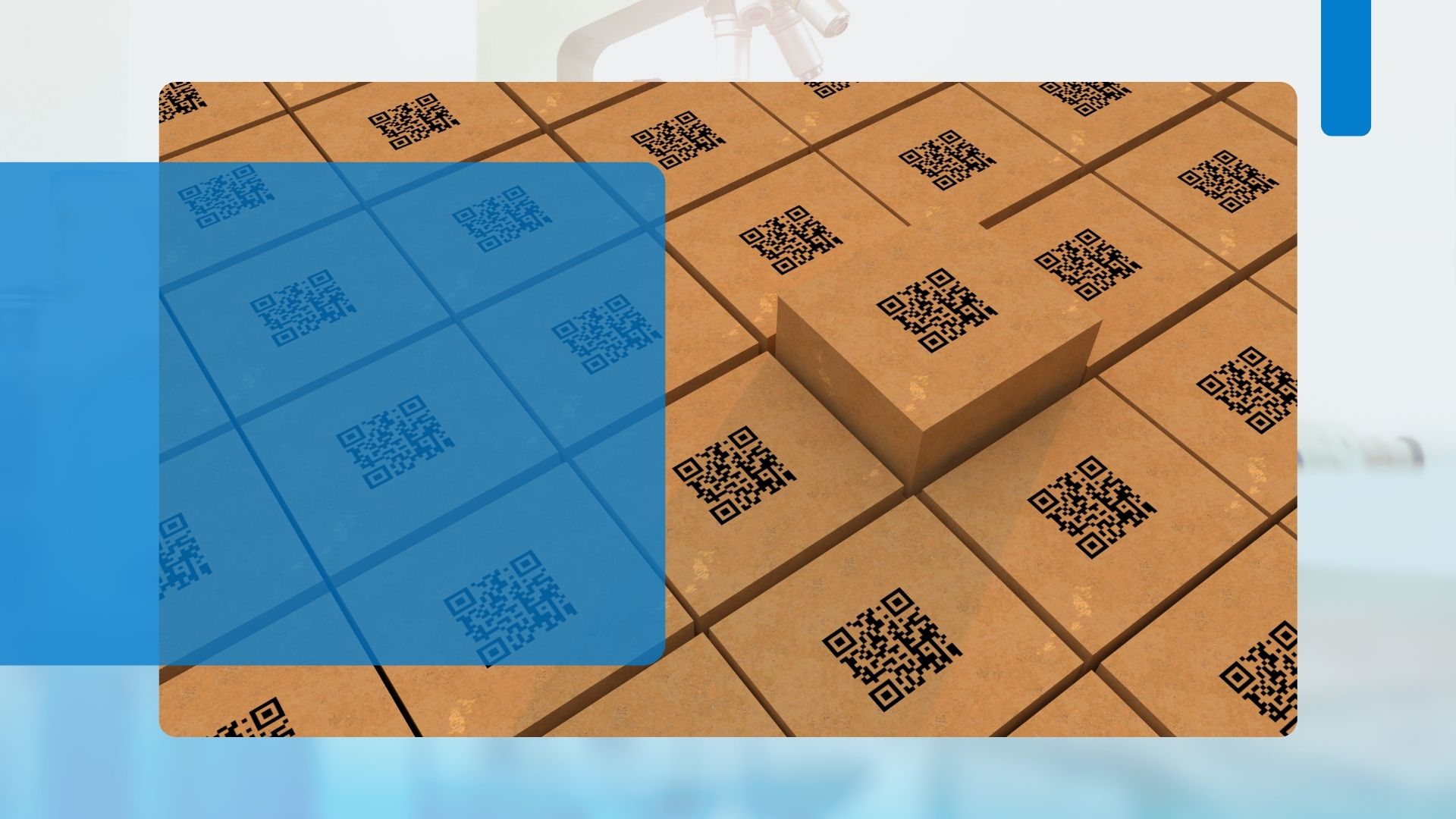
TRVST is a traceability and verification system that records, tracks, and authenticates every step of a product’s journey — from raw material to end consumer.
It combines tamper-evident digital records, scan-based verification, and real-time analytics, giving businesses a single source of truth for origin, compliance, and authenticity, and giving consumers a way to confirm what they’re buying is real.
In a market where 1 in 4 consumers has unknowingly bought a counterfeit online, and where regulations like the EU’s Digital Product Passport, FSMA 204, and DSCSA are forcing supply chain transparency into law, traceability is no longer a nice-to-have. TRVST turns it into a competitive advantage.
What is a traceability and verification system?
A traceability and verification system is software that captures, stores, and proves the history of a product — every input, handler, location, and transformation between source and shelf — in a way that cannot be quietly altered. “Traceability” answers where did this come from and where has it been. “Verification” answers is this the real thing, and does the record check out.
Together, they let a brand, a regulator, or a customer scan a single code and instantly confirm:
- The product’s true origin and ingredients
- Every handler in its supply chain
- Compliance and certification status
- Whether the unit in hand is genuine or counterfeit
TRVST delivers all four through one platform.
Why traceability and verification matter now
Three forces are pushing traceability from back-office concern to boardroom priority:
- Regulation is catching up. The EU Digital Product Passport (rolling out across textiles, batteries, and electronics by 2027), the US FDA’s FSMA Rule 204 for high-risk foods, and the Drug Supply Chain Security Act (DSCSA) all require item-level tracking and verifiable records.
- Counterfeits are scaling faster than enforcement. The OECD estimates global trade in counterfeit goods at over $460 billion annually, with luxury, pharma, and electronics hit hardest.
- Consumers vote with their wallets. Surveys consistently show that the majority of shoppers will pay more for products whose claims — organic, fair trade, ethically sourced, locally made — they can actually verify.
A traceability and verification system is how brands meet all three pressures without drowning in spreadsheets.
How TRVST works (in 4 steps)
TRVST is designed to drop into existing supply chains without rebuilding them. The flow:
- Capture. Each product, batch, or component is assigned a unique digital identity — typically a QR code, NFC tag, or RFID — at the point of origin.
- Record. Every handover, processing step, certification, and location update is written to a tamper-evident ledger as it happens. Records are timestamped and cryptographically sealed.
- Verify. Anyone in the chain — auditor, retailer, regulator, end customer — can scan the code and see the verified history in seconds.
- Analyse. TRVST’s dashboard surfaces patterns: bottlenecks, suspicious gaps, expiring certifications, hotspots for fraud, and ESG performance metrics.
The result: end-to-end traceability that’s queryable, auditable, and consumer-facing.
Core features of the TRVST platform
| Feature | What it does | Who it helps |
| Unique digital IDs | Assigns each unit, batch, or SKU a serialised identity (QR/NFC/RFID) | Operations, anti-counterfeit teams |
| Tamper-evident ledger | Cryptographically seals every event in the product’s history | Compliance, legal, auditors |
| Multi-tier supplier onboarding | Brings tier-2 and tier-3 suppliers into the same record system | Procurement, sustainability |
| Real-time scan verification | Customers and inspectors verify authenticity with a phone scan | Marketing, retail, regulators |
| Compliance dashboards | Pre-built reports for FSMA 204, DSCSA, EUDR, DPP, ISO 22005 | Compliance officers |
| Consumer-facing product page | Branded story page triggered by scan — origin, journey, certifications | Brand, marketing |
| API + ERP integrations | Connects to SAP, Oracle, NetSuite, Shopify, and warehouse systems | IT, operations |
| ESG and carbon tracking | Captures Scope 3 inputs at the source of truth | Sustainability teams |
Industries TRVST is built for
Food and beverage
Trace ingredients from farm to fork. Meet FSMA 204 for the FDA’s Food Traceability List. Prove organic, fair trade, and origin-of-origin claims with evidence customers can scan.
Pharmaceuticals and medical devices
Serialise units to comply with DSCSA, EU FMD, and equivalent regimes worldwide. Detect diverted or counterfeit product before it reaches a patient.
Fashion, textiles, and luxury
Issue digital product passports ready for the EU’s 2027 deadline. Verify materials, prove ethical sourcing, and authenticate resale.
Electronics and batteries
Capture material composition, recycled content, and conflict-mineral data required by the EU Battery Regulation and incoming circular-economy rules.
Agriculture and commodities
Map deforestation-free supply chains for the EU Deforestation Regulation (EUDR). Trace cocoa, coffee, soy, palm, beef, rubber, and timber back to plot of land.
Cosmetics and personal care
Verify clean-beauty claims, ingredient origin, and compliance with EU Cosmetics Regulation and emerging US state-level rules.
🔍 TRVST vs. traditional traceability methods
| Spreadsheets & paper | Legacy ERP modules | TRVST | |
| Item-level tracking | ❌ | Partial | ✅ |
| Tamper-evident records | ❌ | ❌ | ✅ |
| Multi-tier supplier visibility | ❌ | Rarely | ✅ |
| Consumer scan verification | ❌ | ❌ | ✅ |
| Regulator-ready audit trail | Manual | Slow | Instant |
| Time to deploy | Weeks of work, brittle | 6–18 months | Days to weeks |
| Works with existing ERP | N/A | N/A | ✅ via API |
Benefits of using TRVST
- Cut counterfeit losses. Item-level verification makes fakes detectable at the shelf and at the door.
- Stay ahead of regulation. Pre-built compliance for FSMA 204, DSCSA, EUDR, EU DPP, ISO 22005, GS1 standards.
- Win consumer trust. Turn every product into a story customers can verify, not just believe.
- Move faster on recalls. Pinpoint affected lots in minutes instead of days.
- Make sustainability claims defensible. Replace marketing assertions with auditable records.
- Reduce compliance overhead. Automate the reports your team currently builds by hand.
Frequently asked questions about TRVST
What is TRVST?
TRVST is a traceability and verification system that lets businesses track products from origin to consumer and prove authenticity, compliance, and ethical claims with tamper-evident digital records.
How is traceability different from verification?
Traceability is the history of a product — every input, handler, and location. Verification is the check — confirming that the record is genuine and that the physical item matches it. A complete traceability and verification system, like TRVST, does both.
Does TRVST use blockchain?
TRVST uses cryptographic, tamper-evident records to seal product history. Whether the underlying ledger is blockchain or a permissioned distributed database depends on the deployment — what matters is that records cannot be silently altered after the fact.
Which regulations does TRVST help with?
TRVST is built to support FSMA Rule 204 (US food), DSCSA (US pharma), EU Digital Product Passport, EU Deforestation Regulation (EUDR), EU Battery Regulation, EU FMD, and ISO 22005, among others.
Can TRVST integrate with my existing ERP?
Yes. TRVST connects via API to SAP, Oracle, NetSuite, Microsoft Dynamics, Shopify, and most warehouse management systems, so it adds a verification layer without replacing what already works.
How do customers verify a product?
By scanning a QR code, NFC tag, or RFID on the packaging with a standard smartphone. The scan returns a branded product page showing origin, journey, certifications, and an authenticity check.
How long does it take to deploy TRVST?
Most pilots are live in two to four weeks. Full multi-tier rollouts depend on supplier onboarding pace and typically run one to three months.
Is TRVST suitable for small businesses?
Yes. TRVST scales from single-SKU artisan brands proving origin to multinational manufacturers running millions of serialised units.
How much does TRVST cost?
TRVST pricing is based on the number of serialised units, supplier seats, and the integrations required. Most customers fall into a starter tier for pilots, a growth tier for single-region rollouts, and an enterprise tier with custom SLAs and dedicated support. Volume discounts apply above one million units per year.
Can TRVST detect counterfeit products?
Yes. Every TRVST identifier is unique, cryptographically signed, and tied to a single physical unit. A counterfeit using a copied code is flagged the moment the original is scanned elsewhere, or when scan patterns (location, frequency, sequence) don’t match the legitimate supply chain.
What happens if a QR code is damaged or unreadable?
Each TRVST identifier has multiple recovery paths: a human-readable serial number printed alongside the code, NFC as a backup carrier where used, and manual lookup through the TRVST portal using batch and lot numbers. No single point of failure breaks verification.
Is TRVST GDPR compliant?
Yes. TRVST is GDPR compliant by design. Consumer scans are anonymous by default, no personal data is required to verify a product, and any optional account features (warranty registration, loyalty) use explicit opt-in consent. EU customer data can be hosted in EU regions on request.
Where is TRVST data stored?
TRVST data is stored in encrypted, geographically distributed cloud infrastructure with options for EU, US, and APAC residency. Enterprise customers can choose specific regions to meet data sovereignty, GDPR, and industry-specific requirements.
Who owns the data captured in TRVST?
The brand or manufacturer owns the data they put into TRVST. TRVST acts as a custodian, not an owner. Customers can export their full dataset at any time, and contractual terms prohibit TRVST from using customer data for any purpose beyond delivering the service.
Does TRVST work offline?
Yes. The TRVST scan experience works on any modern smartphone browser without an app, and inspector and warehouse workflows support offline scanning with automatic sync when connectivity returns. Records are queued locally and reconciled against the ledger once the device is back online.
Do customers need to download an app to verify a product?
No. Consumers verify TRVST products by scanning a QR code with their phone’s native camera, which opens a branded web page. No app install, no account, no friction.
How does TRVST support product recalls?
TRVST shrinks recall response time from days to minutes. Because every unit is tied to its batch, lot, supplier, and distribution path, a recall query returns the exact affected SKUs, their current locations in the chain, and which retailers and customers received them. Notifications can be triggered automatically.
Can TRVST issue a Digital Product Passport (DPP)?
Yes. TRVST is built to issue EU-compliant Digital Product Passports for the product categories rolling into scope under the Ecodesign for Sustainable Products Regulation (ESPR) — starting with textiles, batteries, and electronics. The same identifier serves as the DPP carrier.
How does TRVST handle ESG and carbon reporting?
TRVST captures Scope 3 data at the point of origin — material composition, supplier emissions factors, transport legs, and certifications — and rolls it up into product-level and portfolio-level reports aligned with CSRD, SEC climate rules, and GHG Protocol. Because the data is captured at source, claims are defensible to auditors.
What if one of my suppliers refuses to onboard?
TRVST supports staged onboarding. Suppliers that aren’t yet on the platform can be represented by lightweight data feeds (CSV uploads, EDI, manual entry by your team) while you migrate them in. The system shows clearly which links in the chain are fully verified versus partially documented, so you always know where your traceability gaps are.