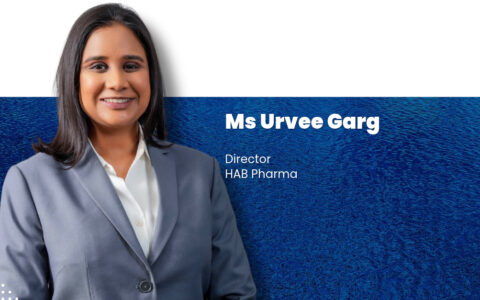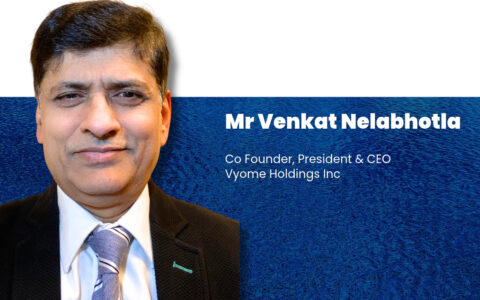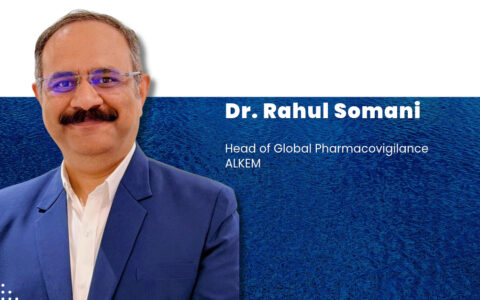
1. For a long time, pharmaceutical engineering developed largely on its own. That’s changing fast. The boundaries between pharma, biotech, food processing, chemicals, renewable energy, and advanced manufacturing are fading. Looking across these industries, what are the most useful engineering lessons they’re learning from each other, and which ones do you think they still need to learn?
For many years, industries worked in silos, each solving similar engineering challenges in different ways. Today, that approach is changing. We see pharmaceutical companies adopting automation and digital manufacturing practices from advanced manufacturing, while food processing has demonstrated remarkable efficiency in lean operations and high-throughput production. The renewable energy sector, on the other hand, has accelerated the industry’s focus on energy optimisation and carbon reduction.
What every industry is increasingly learning is that engineering excellence is no longer just about designing a compliant facility. It is about designing an intelligent, sustainable, and adaptable one.
The biggest lesson still to be learned is collaboration. Companies often benchmark only within their own industry, whereas many of the best solutions already exist elsewhere. The future belongs to organisations that are willing to learn across sectors rather than within their own boundaries.
2. Manufacturing excellence used to be measured by one thing: regulatory compliance. Not anymore. Today it also includes digitalisation, sustainability, resilience, workforce productivity, and lifecycle efficiency. How has the role of the engineering consultant grown to meet these wider demands, and how is the job different from what it was ten years ago?
Ten years ago, engineering consultants were primarily expected to deliver facilities that met regulatory requirements, within budget and on schedule. Today, those expectations are only the starting point.
Clients now expect us to help shape long-term business strategy through engineering. We advise on digital readiness, energy efficiency, ESG objectives, automation, operational flexibility, and future expansion. Every design decision is evaluated not only for today’s requirements but also for how it will perform over the next twenty or thirty years.
The engineering consultant has evolved from being a project executor into a strategic advisor. Success today is measured not simply by whether a facility starts production, but by how efficiently it continues to perform throughout its entire lifecycle.
3. Companies are investing heavily in automation and data, but many struggle to get real value from it. In your experience, what actually separates the digital transformation projects that deliver results from the ones that end up as expensive tools no one really uses?
Technology alone never delivers transformation. People and processes do.
The projects that succeed always begin by asking, “What business problem are we trying to solve?” They integrate digital systems into operational workflows, train people properly, and ensure that management actively uses the information generated for decision-making.
Projects fail when technology is implemented simply because it is available or fashionable. Installing sophisticated software without changing operating practices only adds complexity.
Digital transformation should simplify operations, improve decision-making, reduce downtime, and increase productivity. If it doesn’t achieve those outcomes, it becomes an expensive investment with limited value.
4. Every industry has its own regulations, but the core engineering principles are often very similar. When you design a facility, whether for pharma, biotech, food, or chemicals, how do you balance these shared principles with the specific needs of each sector?
Every successful facility is built on the same engineering fundamentals, efficient process flow, safety, quality, maintainability, operational efficiency, and sustainability.
Where industries differ is in how these principles are applied. Pharmaceutical facilities demand stringent contamination control and regulatory compliance. Food facilities prioritise hygiene and production efficiency. Chemical plants focus heavily on process safety and hazardous material management. Biotech projects require flexibility to accommodate rapidly evolving technologies.
Our approach is always to establish a strong engineering foundation first and then customise the design to meet the industry’s regulatory, operational, and commercial requirements. Good engineering remains universal, while successful execution is always industry specific.
5. Global supply chains are under constant pressure from geopolitics, new regulations, and rising sustainability expectations. Given all this change, how should companies rethink facility design today so that a plant built now is still competitive and adaptable twenty years from now?
The biggest mistake companies can make is designing only for today’s production requirements.
Facilities built today must anticipate future uncertainty. That means designing for flexibility, modular expansion, multiple product capabilities, evolving regulatory standards, digital integration, and higher levels of automation. Sustainability must also be embedded from the beginning through energy-efficient utilities, water conservation, renewable energy integration, and resource optimisation.
The most valuable facility is not necessarily the most technologically advanced, it is the one that can adapt to changing business needs without requiring major reconstruction every few years.
Adaptability has become one of the most important design parameters.
6. Many companies still see engineering consultants as execution partners who come in after the big decisions are made. But a lot of the real value is created much earlier, during concept development and planning. Where do you think engineering consulting has the biggest long-term impact, and what do clients most often overlook about this early stage?
The greatest value an engineering consultant provides is before a single drawing is prepared.
During concept development, we influence facility layout, manufacturing strategy, technology selection, expansion planning, utility philosophy, project economics, and operational efficiency. Decisions made at this stage determine a facility’s performance for decades.
Unfortunately, some organisations underestimate the importance of this phase because there are few visible deliverables. Yet this is where costly mistakes can either be prevented or permanently built into the project.
Investing time in thoughtful planning almost always reduces project risk, improves operational performance, and lowers lifecycle costs. In engineering, the quality of the outcome is largely determined before construction even begins.
7. Technology often gets the spotlight, but people ultimately drive transformation. What qualities and capabilities do you think the next generation of manufacturing leaders will need to succeed in an industry that’s changing this quickly?
Technical knowledge will always remain essential, but it is no longer enough.
Tomorrow’s manufacturing leaders must combine engineering expertise with strategic thinking, business understanding, digital literacy, sustainability awareness, and strong leadership skills. They must be comfortable working across disciplines and leading diverse teams through constant change.
Perhaps most importantly, they must remain lifelong learners. Technologies, regulations, and customer expectations will continue to evolve at an unprecedented pace. Leaders who remain curious, adaptable, and willing to challenge conventional thinking will be the ones who create lasting impact.
The future will not belong to those who simply build facilities—it will belong to those who build organisations that are capable of continuously evolving.