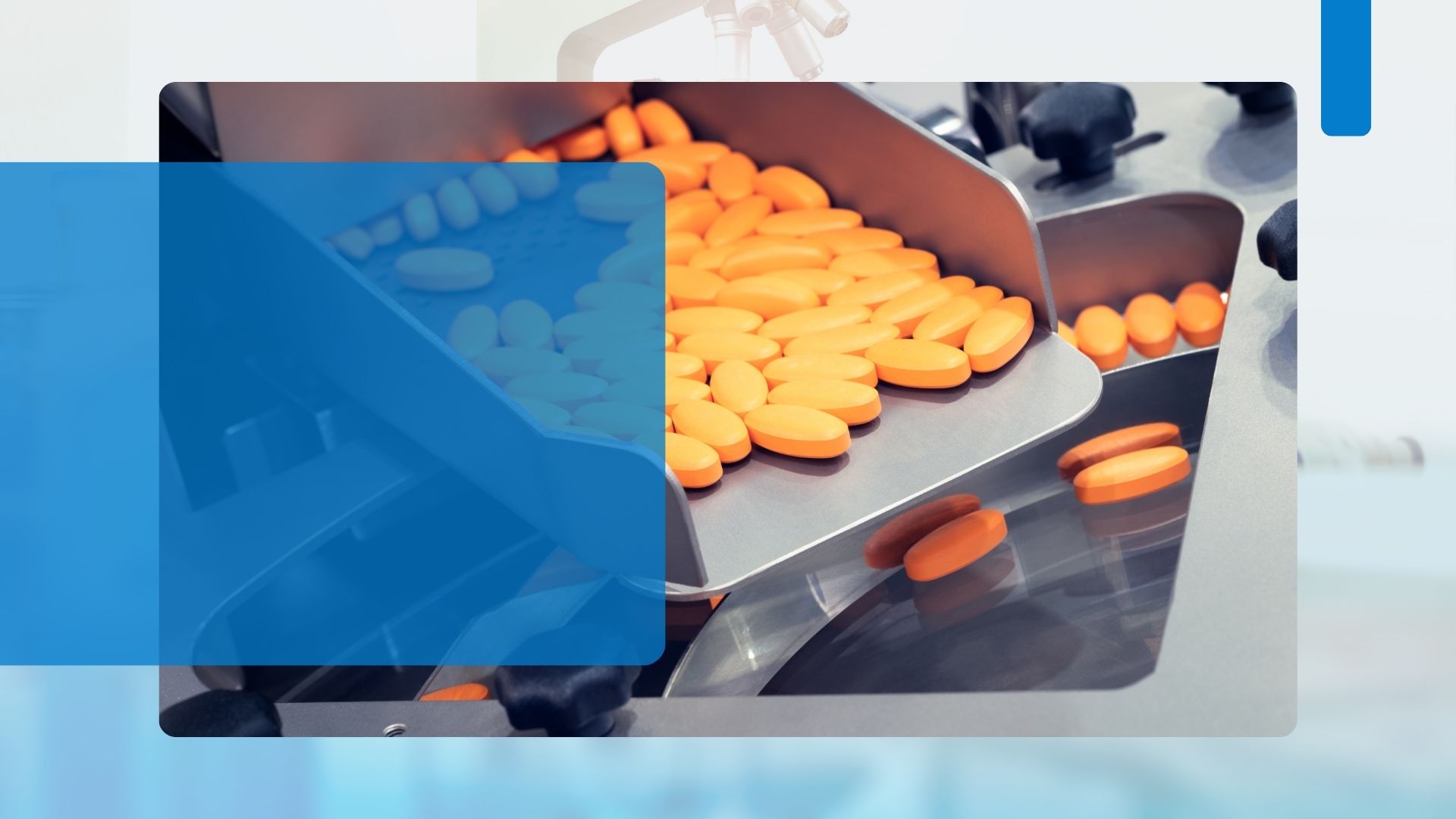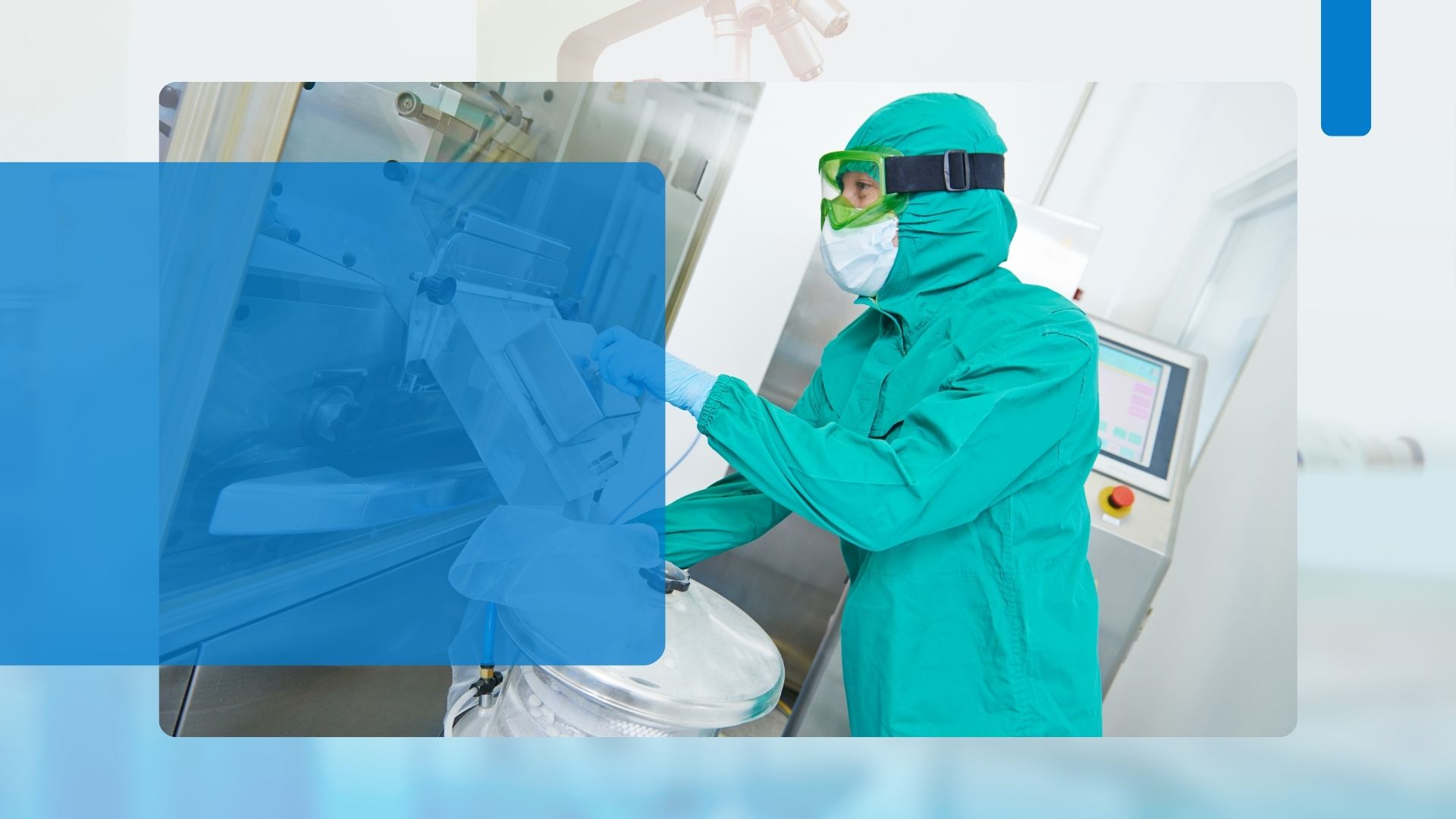
The tablet manufacturing process in pharmaceuticals is a multi-step, highly regulated sequence of operations that transforms raw powder into a precise, stable, and effective oral solid dosage form. Tablets may appear simple, but behind each unit lies a combination of formulation science, engineering precision, and GMP compliance.
This article offers a comprehensive, technically detailed breakdown of every stage in the pharmaceutical tablet production line, from raw material handling to final quality assurance – optimized for professionals, process engineers, and quality teams.
1. Dispensing – The First Step in Tablet Manufacturing
Every tablet batch begins with the accurate dispensing of Active Pharmaceutical Ingredients (API) and excipients based on the Master Manufacturing Formula (MMF).
Key Considerations:
- Gravimetric dispensing systems (±0.1–0.5% accuracy)
- Use of closed bin systems (IBC or FIBC)
- Barcode-based Material Traceability via MES or ERP
- Conducted in GMP-compliant Grade C/D cleanrooms
Formula Example:
If the target API weight is 2.000 kg:
Tolerance = ±0.1% → Acceptable range: 1.998–2.002 kg
Dispensing errors at this stage can affect every downstream process in the tablet manufacturing process in pharmaceuticals.
2. Sieving & Milling – Ensuring Flow and Uniformity
Sieving eliminates foreign matter and agglomerates, while milling standardizes particle size for consistent downstream blending.
Tools & Methods:
- Vibratory/Centrifugal Sieves (typically 20–40 mesh)
- Cone Mills for gentle particle size reduction
- Hammer Mills for coarse, hard APIs
Powder Flow Index

Ideal value: 10–15% for excellent flowability
This step optimizes powder flow, which is critical for the tablet formulation process.
3. Blending – Achieving Homogeneity in Tablet Formulation
In this stage, APIs and excipients are blended to ensure uniform distribution of the active component in each dose.
Equipment:
- V-blenders, bin blenders, or double-cone mixers
- NIR (Near Infrared) sensors for real-time blend uniformity
Acceptance Criteria:
- Relative Standard Deviation (RSD) < 5%
- Complies with USP <905> Content Uniformity
Uniform blending is the backbone of quality in the tablet production process in pharmaceuticals.
4. Granulation – Enhancing Compressibility
Granulation improves powder handling, reduces segregation, and enhances tablet strength.
Techniques:
- Wet Granulation (binder + drying)
- Dry Granulation (roller compaction for moisture-sensitive APIs)
Critical Parameters:
- Loss on Drying (LOD): Target < 1.5%
- Granule Size Distribution:
- D10, D50, D90 (e.g., D90 < 850 μm for uniform granules)
Granulation is central to building the structure needed for reliable compression in tablet manufacturing.
5. Compression – The Core of Tablet Manufacturing
Granules are compressed into tablets using rotary tablet presses with pre-compression and main compression stages.
Compression Controls:
- Tablet Weight: ±5% (for tablets <130 mg)
- Hardness: Typically 4–10 kiloponds (kp)
- Thickness and friability: <1% loss per USP <1216>
Compression Force Formula:

Where F = Force, P = Pressure, A = Punch area
This is the defining phase of the tablet manufacturing process, where granules become solid-dose units.
6. Coating – Beyond Looks: Functional Finishing
Coating improves stability, taste masking, and controlled release.
Technologies:
- Pan Coating Systems
- Fluid Bed Coaters
Coating Variables:
- Spray rate: 10–30 g/min
- Inlet air temp: 60–80°C
- Bed temperature: 45–55°C
- Pan speed: 8–15 rpm
Polymers Used:
- HPMC, PVA, Eudragit, HPMCAS
Target: Coating weight uniformity RSD < 3%
Coating transforms tablets into functionally intelligent products in pharmaceutical tablet production.
7. Testing – Built-in Quality Assurance
Quality control ensures consistency across appearance, strength, disintegration, dissolution, and chemical content.
In-Process & Final Testing:
- Disintegration time: ≤15 min (per USP <701>)
- Dissolution: ≥80% drug release within 30 min
- Hardness, thickness, and friability
- Assay & Content Uniformity using HPLC or UV
PAT Tools:
- NIR, Raman spectroscopy, automated sampling units
Testing is not a gatekeeping step, it’s integrated into every stage of the tablet manufacturing process in pharmaceuticals.
8. Packaging & Stability – Protection Through the Final Mile
Blistering and bottling ensure product protection from moisture, oxygen, and light.
Key Considerations:
- Inclusion of desiccants in HDPE bottles
- Cold sealing or thermoforming for blister packs
- Stability Testing under ICH conditions:
- Accelerated: 40°C ± 2°C / 75% RH for 6 months
- Long-term: 25°C ± 2°C / 60% RH for 12–24 months
The Tablet Manufacturing Process in Pharmaceuticals is a Controlled Symphony
From precise weighing to molecular-level testing, the tablet manufacturing process in pharmaceuticals is a carefully choreographed system built on science, engineering, and control.
It’s not just about compressing powder, it’s about building reliable drug delivery systems that meet therapeutic goals and global regulatory requirements.
Next time you consume a tablet, remember, it’s not just a pill.
It’s a pharmaceutical engineering marvel, shaped by GMP, QbD, and technical excellence.